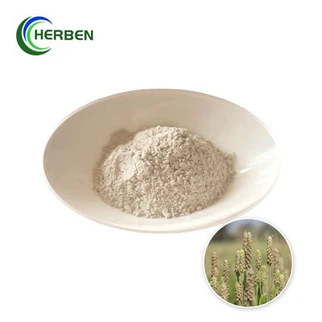

silymarin powder has been used in the West for more than 2,000 years, and was introduced to China less than 50 years ago. Although it is only sold as a health supplement in most Western countries, silymarin powder is sold as a prescription drug in China, and the market size has accounted for approximately 700 million yuan.
Due to the failure to produce convincing modern medical clinical data, silymarin powder can only be relegated to the shelves of health products in the United States and other places, and is not entitled to enjoy the treatment of pharmaceuticals. In China, this herbal medicine has experienced a "magical" journey from its introduction to pharmaceutical use to its use as traditional Chinese medicine.
The Western herbal medicine background of silymarin powder can be said to be very clear. After all, it was introduced to China less than 50 years ago.
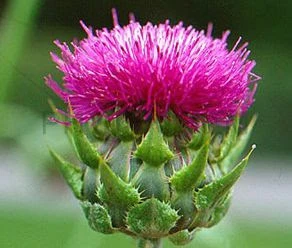
According to an article "Research Progress in silymarin powder Cultivation" in the magazine "Chinese Modern Chinese Medicine": In 1952, the Beijing Botanical Garden introduced silymarin powder from the United Kingdom as an ornamental plant for cultivation. The company introduced species from Germany and cultivated them as medicinal plants.
Once introduced, Chinese medicine enthusiastically embraced this Western herb.
In 1974, "Chinese Herbal Medicine Newsletter" magazine published "Introduction to silymarin powder Cultivation Technology". During the same period, this journal, which focuses on traditional Chinese herbal medicine research, also recorded discussions on the medicinal efficacy of two silymarin powder varieties introduced in the 1950s and 1970s respectively.
Also in the 1970s, the hepatoprotective drug "Yiganling" with silymarin as the main ingredient first appeared in China. Later, the "Fufang Yiganling" with silymarin and Schisandra chinensis extract as the main ingredients also appeared.
Just when the domestic ecological community still regarded silymarin powder as an invasive alien species, the "Chinese Pharmacopoeia (2005 Edition)" has classified silymarin powder into the category of traditional Chinese medicine, "returns to the liver and gallbladder meridians", "clears away heat and detoxifies, Soothe the liver and promote gallbladder."
Today, silymarin powder has transformed into one of the key export varieties of Chinese medicinal materials listed in the statistics of the Ministry of Commerce, and is exported to South Korea, the United States, the Middle East and other places.
How does modern medicine view silymarin powder?
Modern medicine, which also originated in the West, has always hoped to rectify the name of silymarin powder, a traditional herbal medicine.
In the 1960s, German scientists extracted the active ingredient silymarin, a complex mixture of flavonolignans, from silymarin powder. They purified the active ingredient and kicked off the modern medical study of silymarin powder.
In 1983, a paper in "Human Toxicology" pointed out that silymarin powder was effective in treating liver damage caused by a poisonous Amanita fungus, and it was almost the only effective drug at that time. The authors believe that silymarin may play a role in preventing hepatitis or even liver cell cancer.
Later, in 1987 and 1996, two heavyweight academic papers published in "Hepatology" showed that silymarin powder showed good antioxidant and anti-fibrotic effects in mouse experiments, showing It may have medicinal potential in chronic liver disease.