
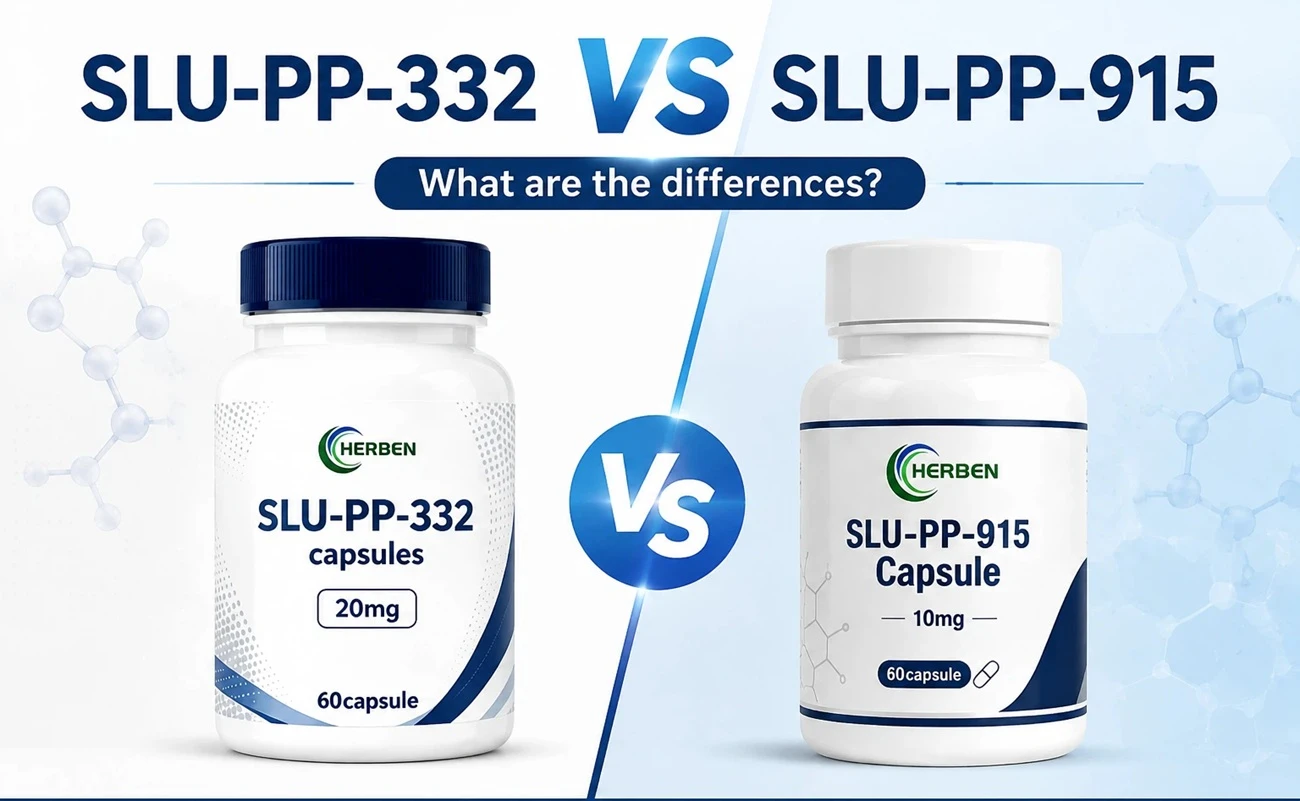
In recent years, exercise mimetics have attracted significant attention in metabolic research. Among these emerging compounds, SLU-PP-332 and SLU-PP-915 are two synthetic small molecules designed to activate estrogen-related receptors (ERRs), a group of nuclear receptors involved in mitochondrial function, energy metabolism, and exercise adaptation.
Both compounds were developed as research tools to study how activating ERR pathways may reproduce some molecular responses normally triggered by aerobic exercise.
Although SLU-PP-332 and SLU-PP-915 share a similar biological target, they have important differences in chemical structure, pharmacological properties, and research applications. The major difference is that SLU-PP-915 was developed as an orally active next-generation ERR agonist to overcome some limitations of SLU-PP-332.
Core Comparison
|
Compound name |
SLU-PP-332 | SLU-PP-915 |
| Chemical name |
4-hydroxy-N'-(2-naphthylmethylene)benzohydrazide |
Boronic acid, B-[3-[5-[[(2-fluorophenyl)amino]carbonyl]-2-thienyl]phenyl]- |
| CAS number | 303760-60-3 | 2285432-92-8 |
| Molecular formula | C18H14N2O2 | C17H13BFNO3S |
| Molecular weight | 290.32 | 341.16 |
| Receptor target | Estrogen-Related Receptor (ERRα, ERRβ, ERRγ) | Pan-ERR agonist (ERRα / ERRβ / ERRγ) |
| Signaling Pathway | Nuclear Receptor Signaling / ERR Activation Pathway | Vitamin D-related / Nuclear Receptor |
| Research Area | Metabolism | Metabolism |
| Purity | 99.28% (HPLC) | 99.335% (HPLC) |
Which Is Better: SLU-PP-332 or SLU-PP-915?
There is currently no human clinical data proving that one compound is superior in humans.
However, based on published research characteristics:
SLU-PP-332 Advantages
- Strong research background
- Demonstrated effects on mitochondrial pathways
- Established exercise-mimetic activity in animal studies
SLU-PP-915 Advantages
- Designed for improved oral availability
- More suitable for oral research applications
- Demonstrated comparable exercise-related effects in animal studies
The main scientific advantage of SLU-PP-915 is not necessarily stronger receptor activation, but rather better drug-like properties and oral delivery potential.
Research comparing the two compounds found that SLU-PP-915 achieved similar exercise capacity improvements to SLU-PP-332 when adjusted for systemic exposure.
How Does SLU-PP-915 Work in the Body?
The mechanism of SLU-PP-915 is based on activation of the ERR signaling pathway.
The simplified pathway is:
SLU-PP-915 enters the body
↓
Activates ERRα / ERRβ / ERRγ nuclear receptors
↓
Stimulates PGC-1 related metabolic pathways
↓
Increases mitochondrial gene expression
↓
Enhances oxidative metabolism and energy utilization
↓
Promotes an exercise-like metabolic response in research models

Role of ERR Receptors
ERR receptors are important regulators of cellular energy metabolism.
They influence genes related to:
1. Mitochondrial Function
Mitochondria are responsible for producing cellular energy.
Activation of ERR pathways may increase:
- Mitochondrial activity
- Oxidative phosphorylation
- Energy metabolism
2. Fatty Acid Oxidation
ERR signaling regulates enzymes involved in converting fatty acids into usable energy.
Research models suggest ERR activation can increase fatty acid utilization.
3. Exercise Adaptation Pathways
During endurance exercise, muscles activate pathways controlled by:
- PGC-1α
- ERRα
- ERRγ
SLU-PP-915 is designed to stimulate similar molecular signals without physical exercise stimulation. This is why it is classified as an exercise mimetic research compound.
What is the difference between SLU-PP-915 and SLU-PP-332?
The biggest difference is oral availability.
SLU-PP-332 is an earlier ERR agonist with limited oral activity, while SLU-PP-915 was developed as an orally active successor with improved pharmacological characteristics.
Conclusion
SLU-PP-332 and SLU-PP-915 represent important research tools in the field of exercise mimetics and mitochondrial metabolism.
Both compounds work through the ERR signaling pathway, activating genes involved in energy metabolism and mitochondrial function.
The major difference is that SLU-PP-915 was developed as an orally active next-generation ERR agonist with improved pharmaceutical properties compared with SLU-PP-332.
Current scientific evidence supports further research into SLU-PP-915, especially in areas related to mitochondrial biology, metabolic regulation, and exercise physiology.
Related Products