
First One: AKG
AKG is one of the metabolites of the tricarboxylic acid (TCA) cycle. It plays a vital role in cellular energy metabolism, amino acid/protein synthesis, epigenetic regulation, stem cells and differentiation, fertility and reproductive health, and cancer cell behavior.
AKG and Anti-aging
AKG is one of the metabolites of the tricarboxylic acid (TCA) cycle. It plays a vital role in cellular energy metabolism, amino acid/protein synthesis, epigenetic regulation, stem cells and differentiation, fertility and reproductive health, and cancer cell behavior.

In this experiment:
1) The older the participants were, the more obvious the effect was.
2) Men lost more weight than women.
Other clinical effects of AKG:
Skin, anti-oxidation, recovery. According to a 2023 review report, the proven effects of AKG in the human body also include:
Promoting skin hydration (what you call "smooth");
Promoting ROS detoxification;
Promoting postoperative recovery;
Improving quality of life.

The article also points out that in addition to its antioxidant capacity, the anti-aging effect may also be due to the fact that AKG supports the function of stem cells (making your cells younger) and enhances the function of immune cells.
There is no AKG in the daily diet, so we choose to take it.
AKG is highly water-soluble, which means it is well absorbed and almost completely used by our body.
AKG also has the ability to control metabolic disorders and improve insulin resistance. This is much better than rapamycin, which may cause insulin resistance.
Therefore, AKG can promote muscle growth, wound healing, cell energy status, immunity, faster recovery after surgery, and women's skin tenderness and fertility due to its antioxidant properties and support for stem cell and immune cell function.
Second: PQQ (Pyrroloquinoline Quinone)
PQQ is a new cofactor with similar physiological functions to vitamins. It exists in fermented soybeans, natto, green peppers, kiwis, parsley, tea, papaya, spinach, celery, and breast milk.
The biological functions of PQQ are mainly concentrated in two aspects:
1. Supporting the growth and development of mitochondria (mitochondria are the energy factories of cells, which is related to your energy)
2. Good antioxidant properties, scavenging free radicals, and reducing cell damage (that is, reducing the damage to cells by free radicals)
These two functions make it have a powerful effect on brain health, cardiovascular health, metabolic function health, etc.
First Function of PQQ:
1. Improve muscle quality, strength, and motor function.
According to a double-blind controlled clinical trial: taking PQQ supplements for 12 weeks helps maintain muscle strength, quality, and physical activity function.
2. Anti-fatigue
PQQ promotes energy production (through TCA cycle)
Activate longevity proteins: PQQ increases NAD+, thereby enhancing sirtuin 1 (SIRT1) activity (and SIRT1 can promote the production of mitochondria, so eating PQQ improves energy and muscle mass)
3. Anti-inflammatory
PQQ can inhibit inflammatory cytokines in skeletal muscle (inhibit muscle atrophy, reduce muscle protein breakdown)
4. Anti-oxidation
PQQ removes reactive oxygen species (ROS) in skeletal muscle, thereby inhibiting muscle atrophy

Second Function of PQQ:
Improve brain cognition
According to another randomized double-blind controlled experiment: taking PQQ for 12 weeks has an improving effect on the cognition of young and elderly people.
It means, it improves their composite memory, verbal memory, cognitive flexibility, processing speed and execution speed. (Prevent Alzheimer's disease).

Third Function of PQQ:
Restore mitochondrial health and improve metabolism PQQ can improve damaged mitochondrial (autophagy) function, reduce fat accumulation and improve metabolic function.

Other preclinical functions of PQQ that need to be confirmed:
Preventing senile osteoporosis (mouse experiment)
Improving eye health and protecting retinal ganglion cells (in vivo and in vitro cell experiments)
Regulating intestinal flora and thyroid function (mouse experiments)
Improving pulmonary hypertension (rat experiments)
Delaying cell aging (human cell experiments)
Preventing ovarian aging and maintaining fertility (mouse experiments)
Third One: Ergothioneine (EGT)
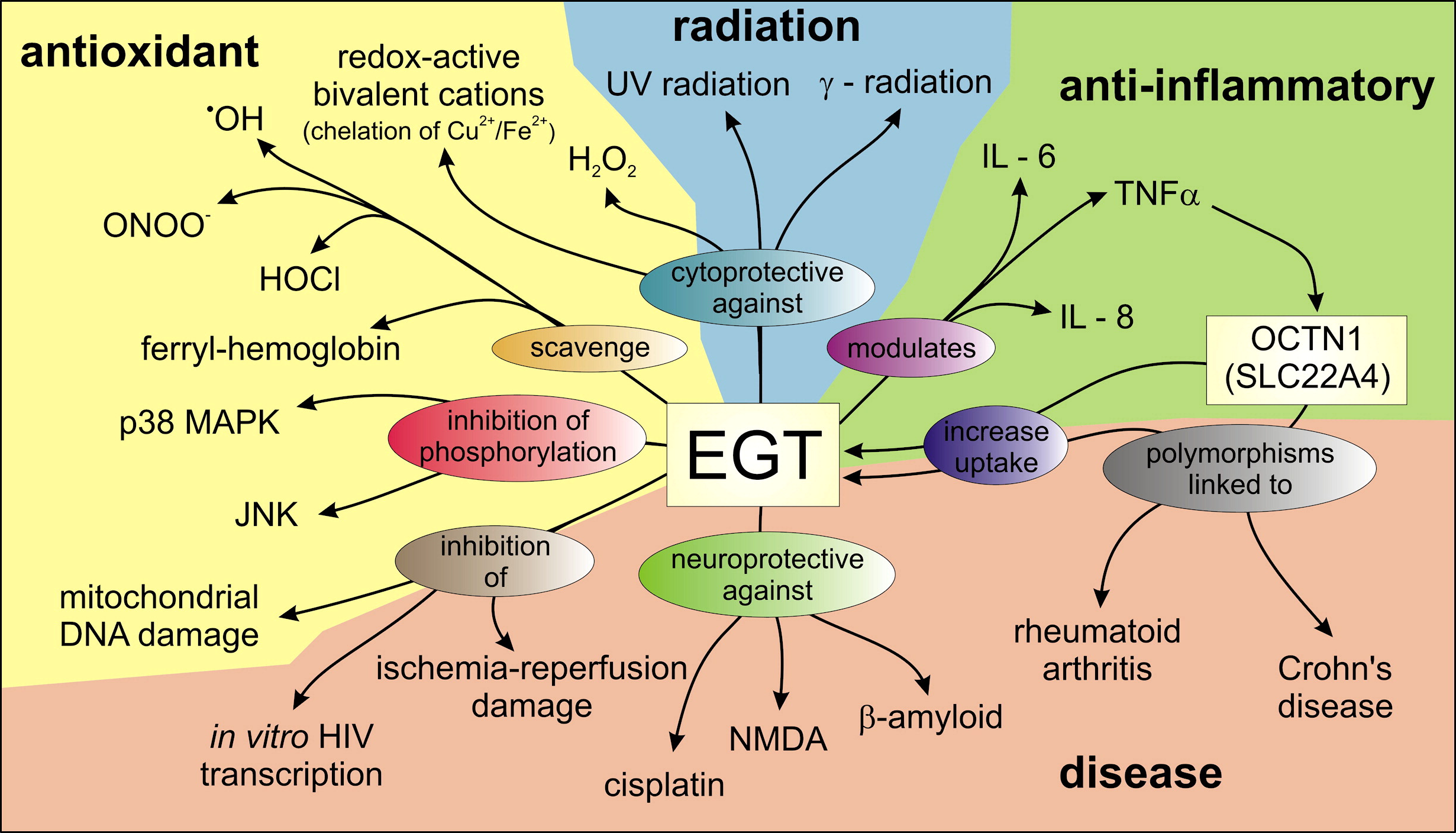
Ergothioneine (EGT) is a rare natural amino acid produced by edible fungi represented by Ganoderma lucidum. Since the human body cannot produce it on its own, it is somewhat similar to vitamins. It has the functions of scavenging free radicals, detoxifying, maintaining DNA biosynthesis, normal cell growth, cellular immunity, anti-radiation, whitening, etc. It was included in the EU New Resource Food List in 2018.
A diet rich in ergothioneine may help prolong life, so ergothioneine is also called the "longevity vitamin" by anti-aging experts.
EGT is not only a direct antioxidant, but also can regulate the entire antioxidant system (increase antioxidant gene expression). In aging cells, free radicals such as ROS and RNS increase, leading to the loss of activity of the longevity protein Sirtuin. Ergothioneine is a scavenger of ROS and RNS, and it can also enhance the activity of Sirtuins by preventing oxidative modification of Sirtuin enzymes (through NAD+)
Ergothioneine affects both Sirtuins and the KEAP1-NRF2 pathway, so it is not only an antioxidant but also an anti-aging agent.
The First Important Part of EGT: BRAIN
Ergothioneine accumulation in the brain may help protect against oxidative damage, inflammation, and mitochondrial dysfunction associated with cognitive decline in the elderly.
The second Important Part of EGT: Skeletal Muscle
The root cause of gait instability in the elderly is oxidative damage to skeletal muscle, and ergothioneine helps protect against this potential damage.
Insufficient intake of ergothioneine may accelerate the development of aging and age-related diseases. Mushrooms contain a relatively high amount of ergothioneine, and supplementation is also a good choice.
Safty of EGT
The current recommended daily intake of ergothioneine is 30 mg, which is far lower than the no adverse effect intake level (NOAEL) of 800 mg per kilogram of body weight per day set by the European Food Safety Authority (EFSA). The U.S. Food and Drug Administration (FDA) has also given ergothioneine a "generally recognized as safe" (GRAS) certification.
Considered As a Whole:
AKG: The new star in anti-aging
PQQ: The guardian of energy
EGT: The new king of antioxidants