



Products Description
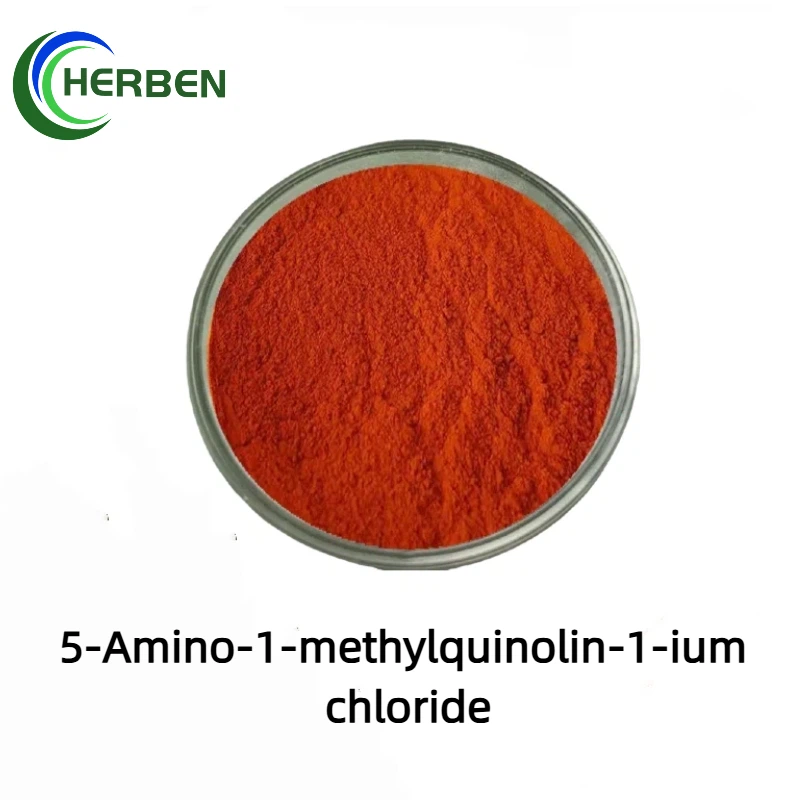
5-Amino-1-methylquinolin-1-ium chloride is not a commonplace pharmaceutical or dietary supplement but rather a well-defined organic salt belonging to the quinolinium class. Its systematic name provides a complete structural description:
1.Quinoline Core: The foundation is a quinoline ring system, a bicyclic structure comprising a benzene ring fused to a pyridine ring. This core is a privileged scaffold in medicinal chemistry, known for its diverse biological activities.
2.1-Methyl Substitution: A methyl group (-CH₃) is attached to the nitrogen atom (N1) of the pyridine ring. This quaternization creates a permanent positive charge on the nitrogen, forming a quinolinium cation. This significantly alters the compound's properties compared to neutral quinoline, typically enhancing water solubility and potentially influencing its interaction with biological targets like enzymes and receptors.
3.5-Amino Functionalization: At the 5-position of the quinoline ring, an amino group (-NH₂) is present. This electron-donating group profoundly influences the electronic distribution of the molecule, affecting its reactivity, spectroscopic properties, and its ability to act as a hydrogen bond donor and acceptor. This is a critical feature for molecular recognition.
4.Chloride Counterion: The positively charged quinolinium cation is balanced by a chloride (Cl⁻) anion, forming a stable, typically crystalline, salt.
The encapsulation of this pure chemical into a solid oral dosage form serves specific purposes: it ensures precise dosing, protects the compound from degradation by light and moisture, masks potential unpleasant taste, and facilitates oral administration for in vivo research or, prospectively, human use. The capsule shell composition (e.g., gelatin or HPMC) can be selected to achieve desired release profiles, such as immediate or delayed release.
Product effects
1.Photodynamic Therapy (PDT) Agent: Quinolinium derivatives are extensively studied as potent photosensitizers. The extended aromatic system allows for efficient absorption of light, and the amino group can fine-tune the absorption wavelength and electrochemical potential. Upon illumination with specific wavelengths of light, the molecule can transition to an excited state and generate reactive oxygen species (ROS), particularly singlet oxygen. These ROS induce localized oxidative damage, leading to cell death. This mechanism is the cornerstone of PDT for anticancer and antimicrobial applications. The capsule form could theoretically be used for systemic administration in PDT protocols, targeting internal tissues.
2.Antimicrobial and Antiparasitic Activity: The quinoline scaffold is a historic and proven platform for antimicrobials (e.g., chloroquine, ciprofloxacin). The cationic nature of the quinolinium core can facilitate interaction with and disruption of negatively charged microbial cell membranes. The 5-amino-1-methylquinolinium structure shows research promise against a range of bacterial, fungal, and parasitic pathogens. Its activity could be mediated by intercalation into DNA/RNA or inhibition of critical enzymes.
3.Biochemical Tool and Fluorescent Probe: The amino group can make this compound fluorescent or serve as a handle for further chemical conjugation. It can be used as a building block to synthesize more complex molecules or as a fluorescent tag for tracking biological processes in cellular assays. Its intrinsic fluorescence could be exploited to study its uptake and localization within cells.
4.Enzyme Inhibition: Quinolines are known to inhibit various enzymes, including kinases and cytochrome P450 isoforms. The specific substitution pattern of this molecule suggests potential as a scaffold for developing selective enzyme inhibitors, which could be relevant for treating diseases like cancer or inflammatory disorders.

Features
(1) High purity: 5-amino-1-methylquinolinium chloride can be obtained through a refined production process to obtain a high-purity product. High purity means better bioavailability.
(2) Targeting: 5-amino-1-methylquinolinium chloride specifically targets the NNMT enzyme and can effectively inhibit its activity, thereby affecting the metabolic pathway of nicotinamide.
(3) Stability: 5-amino-1-methylquinolinium chloride has good stability and can maintain its activity and effect under different environmental and storage conditions.
(4) Development prospects: Due to the various characteristics of 5-amino-1-methylquinolinium chloride, its development has received widespread attention and has broad research and application prospects.

How to get
You can contact us directly or send me email : Jennie sales8@bpandabio.com

Future Market Trends and Prospects
1.Growth in the Research Chemicals Sector: The initial and most stable market is the supply of high-purity chemicals for life science research. As interest in targeted therapies and novel antimicrobials grows, demand for well-characterized, sophisticated chemical tools like this one will increase. Suppliers who can guarantee purity, provide comprehensive analytical data, and offer derivative libraries will lead this space.
2.Precision Medicine and Targeted Therapies: The future of therapeutics lies in personalized, mechanism-driven approaches. A compound like this, which could be engineered for specific targets (e.g., a particular kinase or a microbial enzyme), aligns perfectly with this trend. Its value would be immense if it can be developed as a "theranostic" agent-combining therapeutic action with fluorescent imaging capabilities.
3.The Fight Against Antimicrobial Resistance (AMR): The global AMR crisis is a powerful driver for the development of new antimicrobial classes. Quinolinium salts represent a promising, underexplored chemical space for novel antibiotic discovery. Positive research outcomes could catapult such compounds into high-priority development pipelines, attracting significant investment.
4.Regulatory Hurdles and Commercial Viability: The primary challenge remains the immense cost and time required for drug development. The transition from a research chemical to an approved pharmaceutical is a high-risk endeavor. The commercial future of this specific compound as a medicine depends entirely on robust data demonstrating a significant advantage over existing treatments, such as superior efficacy, reduced side effects, or activity against untreatable conditions.
Hot Tags: 5-amino-1-methylquinolin-1-ium chloride capsule, China 5-amino-1-methylquinolin-1-ium chloride capsule manufacturers, suppliers, factory, Daidzein Powder, API